
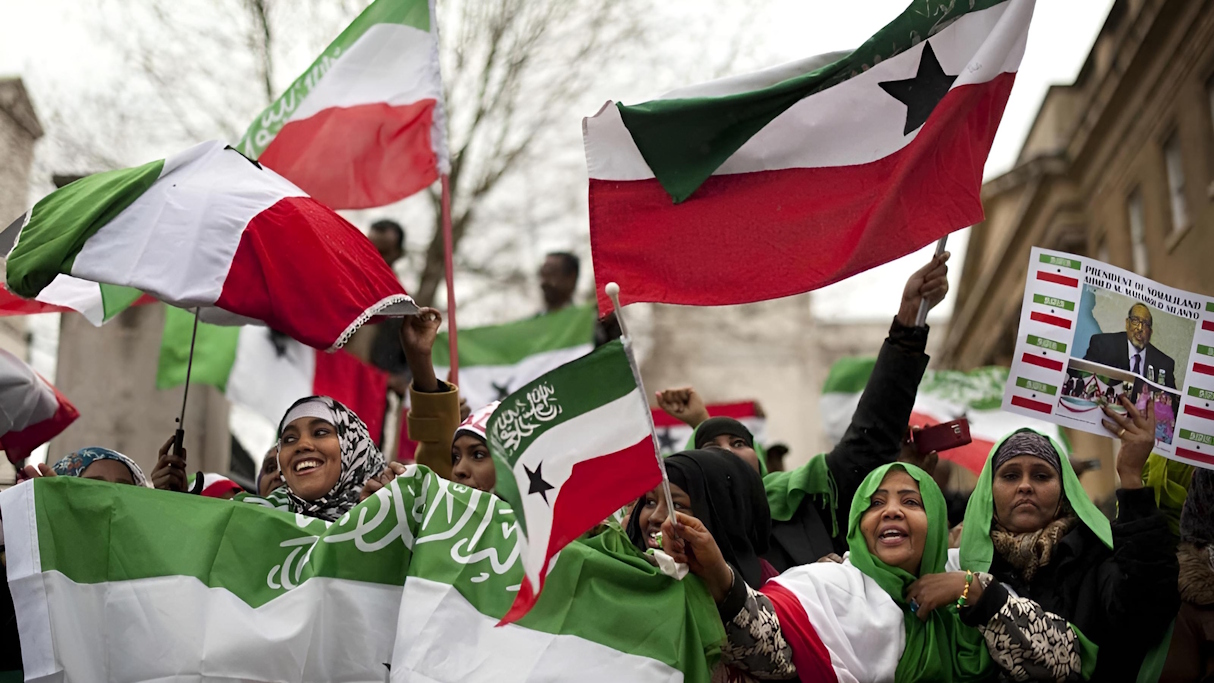

A bold move with immediate consequences
Israel’s decision to formally recognise Somaliland as a sovereign state was always going to attract attention. Somaliland has argued for independence since 1991, pointing to relative stability, democratic processes, and functioning institutions as proof that it operates as a state in practice, if not in law. Yet, despite decades of lobbying, the international position has remained consistent: Somalia’s territorial integrity must be preserved.
Into this delicate equilibrium, Israel stepped forward as the first UN member state to grant recognition. The announcement was public, highly visible, and framed as part of a broader geopolitical strategy. Rather than simply opening a diplomatic channel, it instantly changed the regional conversation — and not necessarily in Somaliland’s favour.
Strategic logic — at least on the surface
From Israel’s viewpoint, the decision could be read as pragmatic. The Horn of Africa and the Red Sea corridor have become increasingly strategic, shaped by maritime insecurity, great-power competition, and exposure to regional conflict.
Positioning itself in Somaliland potentially offered:
- access to key maritime routes,
- security and intelligence cooperation, and
- opportunities for economic and technological partnerships.
For Somaliland, recognition promised long-sought legitimacy — the symbolic acknowledgment that its decades of institution-building had not gone unnoticed.
However, diplomacy rarely unfolds in isolation. Actions taken in one arena often reverberate far beyond their intended boundaries.
The backlash — swift and unusually unified
Somalia reacted instantly, condemning the recognition as an attack on sovereignty and appealing to the international community. That appeal was met with a rare and striking degree of alignment.
Regional and global actors responded by reaffirming Somalia’s territorial integrity. The African Union, Arab League, and Organization of Islamic Cooperation all opposed the move. Strong statements followed from Egypt, Turkey, Saudi Arabia, Qatar, Iran, and China — each warning that unilateral recognition risked escalating tensions in an already fragile region.
The fact that such diverse actors responded in similar language reveals something important: the objection was not only about Somaliland. It was about precedent, process, and power politics.
Why the timing and method mattered
Many states resist legitimising secession because they face their own contested borders. Once Israel made itself the first mover, the issue stopped being a technical African governance question and became entangled with wider Middle Eastern and geopolitical rivalries.
This transformed Somaliland’s diplomatic aspirations into something much larger and more controversial than its leaders likely intended.
A quieter pathway — gradual cooperation, consultation with regional bodies, representative offices, confidence-building — might have created room for dialogue rather than confrontation. Instead, the suddenness of recognition compelled other actors to stake public positions immediately, and most chose rejection.
Internal reactions — not entirely celebratory
Even within Somaliland, reactions were mixed. Political elites welcomed the recognition. But some citizens voiced concern about new risks: exposure to broader conflicts, potential retaliation from hostile actors, and the fear that Somaliland’s cause may now be viewed less as a governance question and more as a proxy battlefield.
Recognition, in other words, brought status — but also baggage.
A move that may complicate the future
The paradox is clear. Israel likely intended the move as strategic positioning and Somaliland viewed it as validation. Yet the outcome may ultimately be constraining. By polarising the question and forcing international actors to choose sides prematurely, recognition could harden global reluctance rather than soften it.
Whether this becomes a temporary controversy or a lasting obstacle will depend on what follows:
- whether other states cautiously engage or deliberately distance themselves,
- whether Somalia and Somaliland maintain political dialogue, and
- whether the relationship remains practical or drifts into symbolic geopolitics.
A lesson in how diplomacy is done
Recognising Somaliland is not inherently irrational. There are serious governance arguments in its favour. But the manner, timing, and exposure of Israel’s decision transformed a slow-moving diplomatic question into a polarising geopolitical test case. This moment underscores a long-standing truth: diplomacy is judged not only by objectives, but by method. Sometimes progress depends on patience — and sometimes announcing a victory too loudly ensures it becomes contested before it has time to mature.
Read more on Substack.