
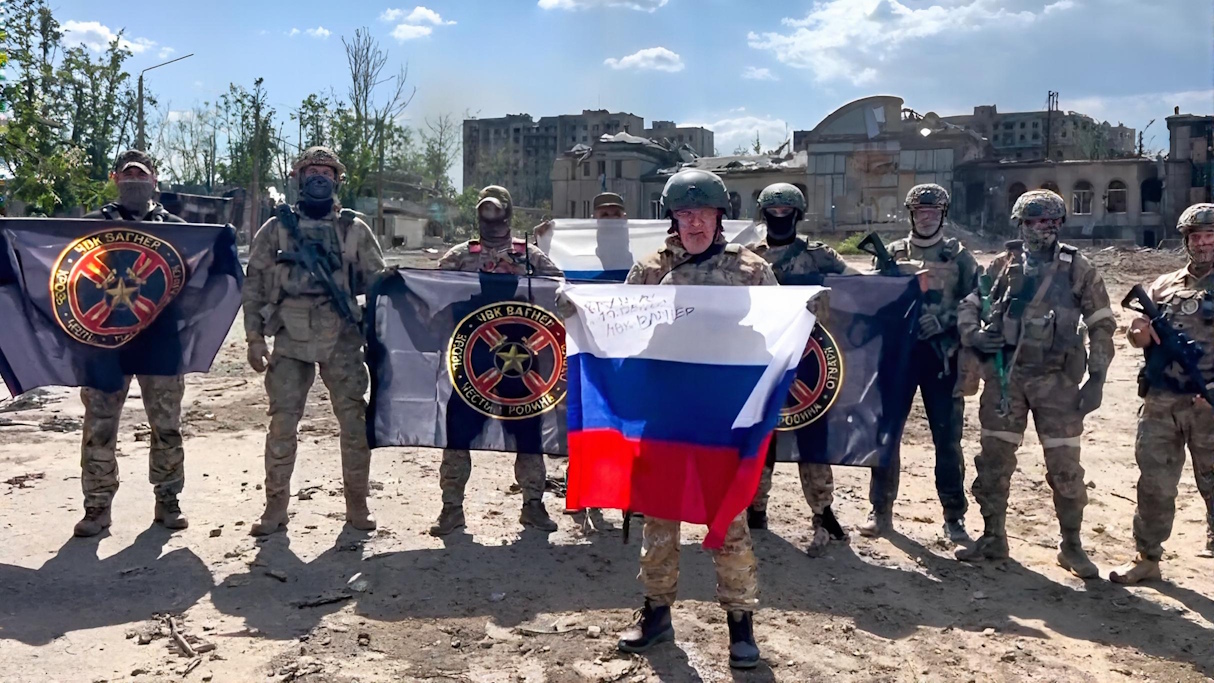

The Wagner Group is often described as a private military company whose rise — and whose apparent collapse following the death of Yevgeny Prigozhin — is taken as evidence of the dangers inherent in outsourcing violence.
This framing is analytically convenient, but ultimately insufficient. Wagner was never simply private, nor was it an anomaly in international security practice.
What Wagner represents is something more consequential: a reconfiguration of how power is exercised when formal military intervention becomes politically costly, legally constrained, and strategically risky. Its evolution reveals how states can project force, shape outcomes, and secure influence while avoiding the responsibilities that traditionally accompany the use of violence.
Understanding Wagner in Africa therefore requires moving beyond questions of ownership or legality and toward a deeper structural question: how has the relationship between force, responsibility, and political authority changed — and why has Africa become the terrain on which this change is most visible?
The rise: deniability as strategy, not disguise
Wagner’s appeal lay not in novelty, but in utility.
For Russia, it offered a means of projecting force, securing access, and shaping political outcomes without the overt commitments associated with conventional military deployment. This logic mirrors long-standing great-power practices of indirect engagement, where influence is exercised without triggering treaty obligations or domestic political backlash.
For African governments — particularly those facing entrenched insurgencies, elite fragmentation, or deteriorating relations with Western partners — Wagner offered speed, decisiveness, and regime insulation. In Mali, for example, the post-2021 junta turned to Wagner after the withdrawal of French forces, seeking a security partner unconstrained by governance conditionalities and domestic political optics (as documented by UN Panel of Experts reports on Mali). In the Central African Republic (CAR), Wagner provided regime protection and battlefield support at a time when state authority barely extended beyond Bangui, a role acknowledged by both UN reporting and Russian officials.
This convergence was not accidental.
Wagner’s structure allowed all parties to benefit from ambiguity. Its nominally “private” status reduced formal attribution, while its operational capabilities delivered tangible security effects. In this sense, Wagner was less a mercenary force than a hybrid mechanism: commercial in form, strategic in function.
The African bargain
For host states, the Wagner relationship followed a familiar logic. Security assistance was bundled with political backing, diplomatic alignment, and, in some cases, access to strategic resources. In CAR, Wagner-linked entities were granted mining concessions in exchange for security services — a relationship detailed in multiple UN expert reports and investigative journalism by outlets such as The Sentry and Reuters.
The attraction was clear. Wagner could protect capitals, suppress armed challengers, and stabilise regimes in the short term. In both CAR and Mali, Wagner deployments coincided with improved regime survivability and tighter control over key urban centres.
The costs, however, were deferred rather than eliminated.
Reliance on external coercive capacity diluted sovereignty, entrenched dependency, and displaced national security institutions rather than rebuilding them. Local forces were often reshaped around regime protection, while civilian oversight and military reform were deprioritised.
This pattern is not unique to Wagner; it reflects a broader trade-off observed wherever external security providers substitute for domestic legitimacy.
Wagner and international law: operating in the grey zone
Wagner is frequently portrayed as operating outside international law.
In reality, international law regulates state responsibility and attribution rather than banning intermediaries outright. States routinely act through auxiliaries, contractors, and aligned non-state actors. What matters legally is whether conduct can be attributed to a state and whether violations can be established — a point emphasised in International Court of Justice jurisprudence and UN reporting on non-state armed actors.
Wagner’s value lay precisely in operating within this ambiguous space.
Its structure reduced formal exposure while preserving strategic effect. This logic is neither novel nor uniquely Russian. It reflects how power is increasingly exercised in an environment where escalation carries high political costs and deniability remains strategically valuable.
The rupture: limits of semi-autonomous force
The events surrounding Yevgeny Prigozhin exposed the inherent tension within such arrangements. Semi-autonomous armed actors may be effective abroad, but they become liabilities once their autonomy or political ambitions diverge from those of the patron state.
Wagner’s rupture was therefore not evidence of failure in Africa, but of misalignment at the centre. The problem was not Wagner’s external utility, but the degree of independence it accumulated internally. From the perspective of the Russian state, the existence of a heavily armed force operating beyond full institutional control was unsustainable — a lesson consistent with historical experiences of proxy and paramilitary forces elsewhere.
The rebirth: formalisation rather than abandonment
The post-Prigozhin restructuring of Wagner-linked operations in Africa is often interpreted as collapse or retreat. A more accurate reading is consolidation. Rather than abandoning the model, Russia moved to absorb these operations more directly into state-controlled or state-aligned frameworks, sometimes referred to as the “Africa Corps” in open-source reporting.
This transition suggests that Wagner was a transitional form — an experiment in proxy force that, having demonstrated effectiveness, required tighter political control. The logic of indirect force projection has not been rejected; it has been refined.
What has changed is not strategy, but governance.
Wagner as a constitutional innovation in the use of force
What Wagner ultimately represents is not merely a proxy force or a deniable military instrument, but a constitutional innovation in how power is exercised beyond the state. It embodies a form of coercion that is strategically effective precisely because it is detached from the obligations that traditionally accompany the use of force.
Conventional military power carries political inheritance. Armies occupy territory, inherit governance responsibilities, attract legal scrutiny, and generate domestic accountability. Proxy forces like Wagner invert this logic. They deliver coercive effect without inheriting the political, legal, or moral burdens that normally follow violence.
Power is exercised, but responsibility remains diffuse.
In this sense, Wagner is less an aberration than a response to a structural dilemma faced by modern states: how to project influence, secure access, and shape outcomes without triggering escalation, occupation, or long-term political liability.
Africa, with its fragmented security environments and weak institutional buffers, has become a proving ground for this model.
Crucially, Wagner’s effectiveness lies not only in what it does, but in what it does not have to do. It does not govern territory, rebuild institutions, reconcile communities, or plan an exit. It does not answer to voters, parliaments, or courts. It delivers force as an outcome, not as a responsibility embedded within a political order.
This represents a shift in the grammar of power.
Coercion is no longer inseparable from governance, and influence no longer requires occupation. Instead, force can be modular, temporary, and strategically deniable. Wagner after Prigozhin, now more tightly integrated with state authority, suggests not a retreat from this model, but its normalisation.
Seen through this lens, Africa is not peripheral to the evolution of warfare. It is central to it. What is being tested on the continent is a future in which power is exercised without ownership, violence without inheritance, and influence without obligation. Wagner is simply one of the most visible manifestations of this broader transformation.
A comparative perspective on proxy warfare
Wagner is frequently portrayed as uniquely destabilising, yet it fits within a long-standing pattern of indirect force projection.
Western powers, including the United States, have likewise relied on partner forces, local militias, and armed intermediaries to shape outcomes without large-scale intervention. In Libya and Syria, support to proxy forces produced fragmented authority and long-term instability, outcomes later acknowledged in Western policy reviews and academic analyses of proxy warfare.
The distinction between “contractors,” “partner forces,” and “proxies” is often rhetorical rather than structural. What differs is not the underlying logic, but the narrative framing applied to different actors. Wagner’s significance lies less in what it represents, and more in what it reveals about the normalisation of proxy warfare as a tool of state power.
Implications for Africa
For African states, the lesson is not that Wagner was uniquely dangerous or uniquely effective. It is that reliance on external coercive actors — whether commercial, proxy-based, or formally allied — reshapes sovereignty itself.
Authority becomes conditional, security transactional, and political accountability diffuse.
Wagner did not create Africa’s security fragmentation; it exploited it. Its restructuring does not resolve the underlying conditions that made such actors attractive. Instead, it signals that external powers are adapting, not withdrawing, their indirect methods of influence.
Final thoughts
Wagner was never merely a private military company, and its evolution after Prigozhin does not mark the end of proxy warfare in Africa. It marks its institutionalisation. What has changed is not the logic of indirect force, but its degree of integration into state power.
As great powers seek influence without occupation and coercion without inheritance, Africa has emerged as a central testing ground for these new arrangements. The continent’s fragmented security environments do not create this model; they accelerate it.
The critical question, therefore, is not whether Wagner-style proxy forces are effective — they often are — but what their normalisation means for sovereignty, accountability, and political order. When force can be exercised without responsibility, power becomes easier to deploy and harder to constrain. Wagner after Prigozhin should be understood not as a failure or aberration, but as an early signal of how state power and organised violence are being re-engineered in the twenty-first century.